

Stone Foundation Repair in Haverhill, MA
Water in the basement, crumbling mortar, or foundation cracks can be signs that an older Haverhill foundation needs attention.
At Done Right Services, we provide stone foundation repair in Haverhill, MA, including re-pointing, waterproofing, crack repair, interior drainage, and repairs around joints and penetrations.
Since 1998, we have helped Massachusetts homeowners protect their foundations with dependable, affordable repairs backed by a lifetime warranty and a 15-year money-back guarantee.

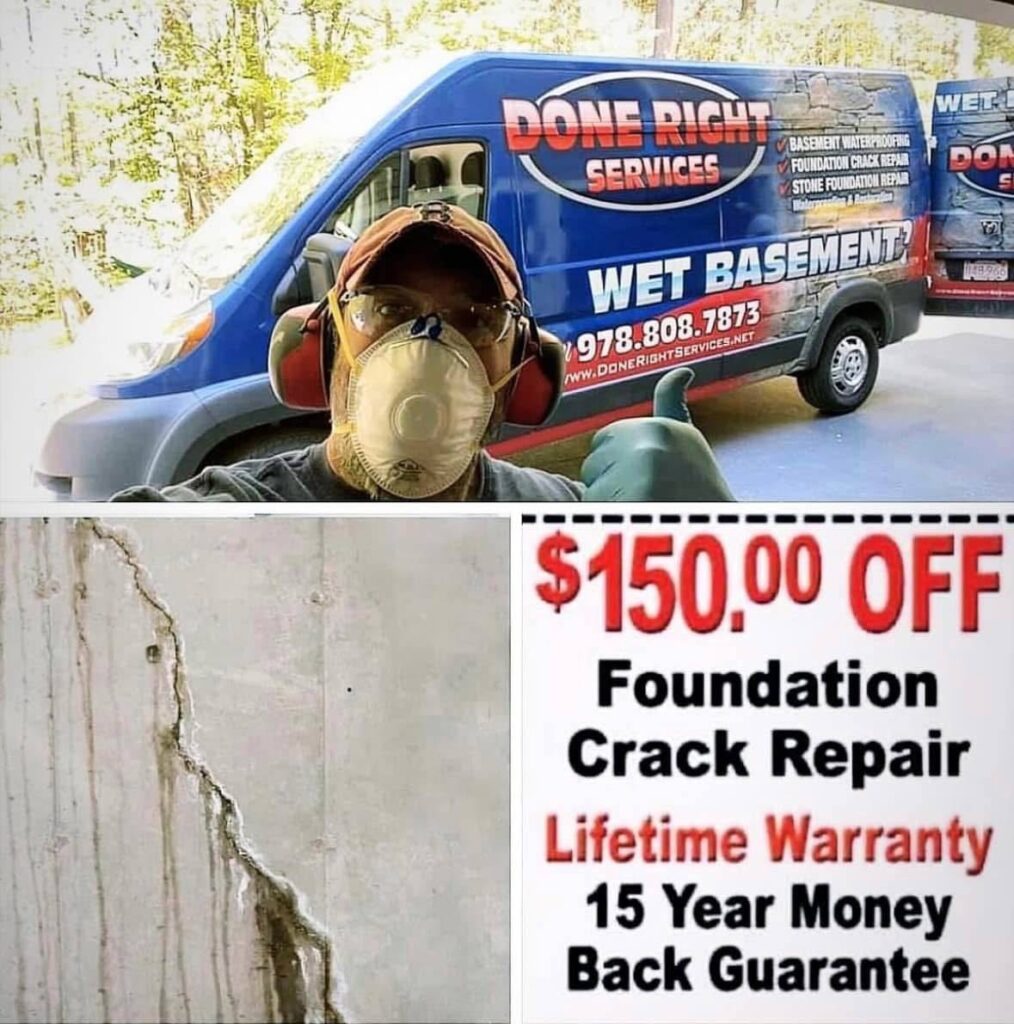
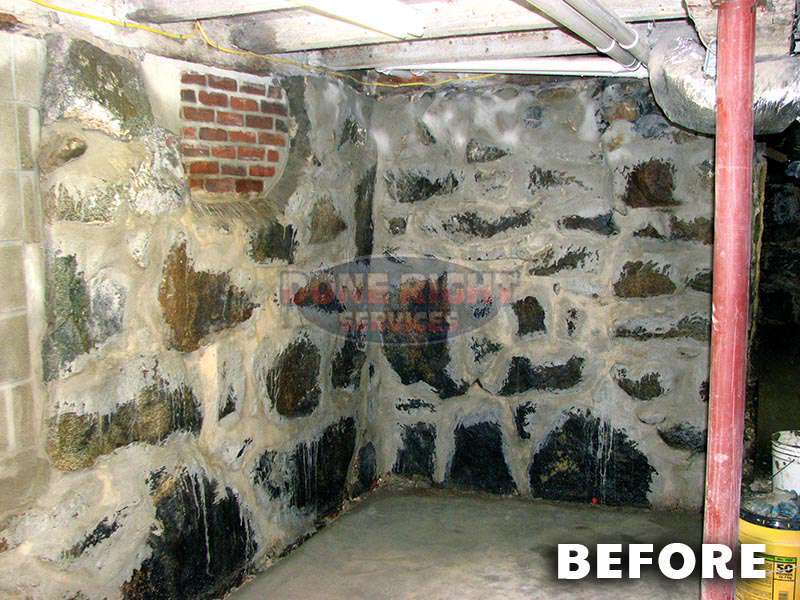
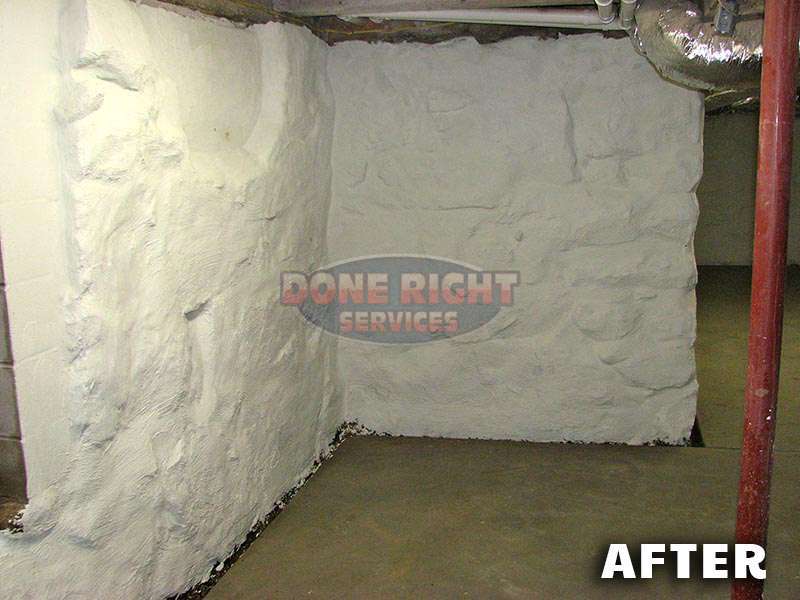
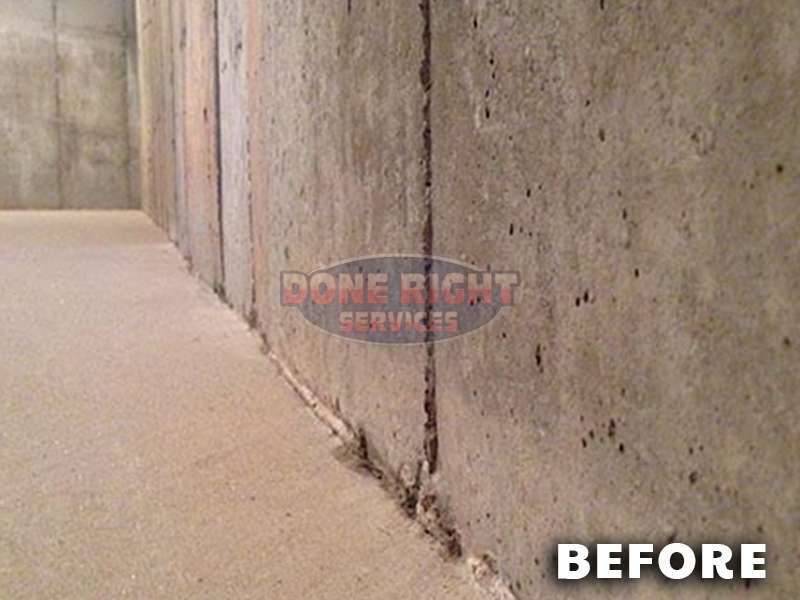
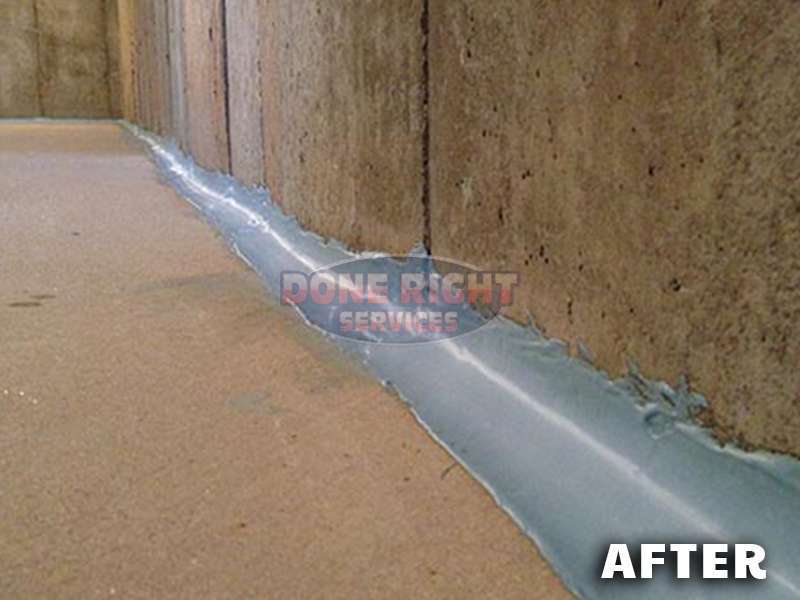
Check Out A Foundation Repair Project We Did Right Here in Haverhill
When a previous foundation repair begins leaking again, simply covering the area rarely solves the underlying problem. At one Haverhill home, an older repair had failed and water was once again making its way through the foundation.
Our team removed the failed repair material, prepared the affected area, and completed a new foundation crack repair designed to create a lasting seal against water intrusion. The project is a good example of why proper preparation and the right waterproofing method matter when repairing an existing foundation problem.
What Causes Foundation Problems in Haverhill?
Many Haverhill homes have foundations that have already endured decades of groundwater, seasonal temperature changes, snowmelt, heavy rain, and ordinary settlement. In older masonry foundations, the stones themselves may remain solid while the mortar between them gradually weakens and begins to break apart.
Once mortar starts deteriorating, small gaps can become pathways for water, drafts, insects, and additional movement. Basement humidity and repeated freeze-thaw cycles can accelerate that process, especially around areas where exterior drainage directs water toward the house.
Poured concrete foundations can develop their own problems. Vertical cracks, joints, penetrations, and seams between different concrete sections can all create paths for groundwater when the surrounding soil becomes saturated.
The right repair starts with identifying what the foundation is made of and where the water or deterioration is actually coming from. A fieldstone wall with failing mortar requires a different solution than a poured-concrete foundation crack.
Stopping Leaks Through Foundation Cracks
Foundation cracks can develop from settlement, material shrinkage, temperature changes, groundwater pressure, and years of normal movement. The first step is determining what type of foundation is cracked and whether the opening is actively allowing water into the basement.
Our professional foundation crack solutions are designed to seal water-entry points while accounting for the normal movement foundations experience over time. We evaluate the crack before choosing a repair method instead of treating every opening the same way.
Keeping Water Out Around Basement Bulkheads
Bulkhead doors and the joints where the bulkhead connects to the foundation are common places for water to enter during heavy rain. Aging seals, cracked masonry, failed coatings, and drainage problems can all allow moisture to move into the basement.
We provide waterproofing for leaking basement bulkheads using sealing, coatings, masonry repair, and drainage improvements where appropriate. The goal is to address the actual entry point instead of simply drying the floor after every storm.
Repairing Cracks in Basement Walls and Floors
Cracks in basement walls and floor slabs can provide a direct path for groundwater, moisture, soil gases, and radon. Even openings that appear minor during dry weather can become more noticeable when groundwater pressure increases after prolonged rain or snowmelt.
Our basement wall and floor crack repairs are designed around the condition of the concrete and the source of the problem. We inspect the opening first so the repair addresses more than what is visible on the surface.
Restoring Cracked Garage and Concrete Floors
Concrete slabs can crack as the ground settles, moisture conditions change, or the material shrinks and moves over time. Open cracks can continue deteriorating at the edges and may also provide a path for moisture and soil gases through the slab.
Our garage and basement floor repair process uses specialized materials intended to create a durable seal across damaged concrete. Whether the problem is a narrow crack or a more noticeable damaged area, we can evaluate the slab and determine the appropriate repair.
Stopping Water Where the Wall Meets the Floor
The cove joint is the seam where the basement wall meets the floor. When groundwater rises around or beneath a foundation, this transition can become one of the first places moisture appears inside the basement.
Our basement cove joint waterproofing system targets this vulnerable area directly. Depending on the amount and source of the water, the solution may involve waterproofing, sealing, or an interior drainage system connected to a sump pump.
Sealing Vulnerable Cold Joints
Cold joints form where separate concrete pours meet. They are common around additions, foundation extensions, stairwells, and other areas where newer concrete connects with an existing structure. Over time, the seam can become vulnerable to water infiltration.
Our team provides cold joint sealing and waterproofing to close these weak points and help prevent groundwater from entering through the connection.
Waterproofing Solutions for Haverhill Basements
Basement water does not always come from one obvious crack. Moisture can enter through deteriorated mortar joints, wall cracks, floor cracks, bulkheads, cove joints, pipe penetrations, and other vulnerable areas around the foundation.
Our waterproofing approach looks at the basement and foundation as a complete system so we can identify the source of the moisture and recommend a solution designed around the actual conditions.
Sealing Pipe Openings and Tie Rod Leaks
Any opening through a foundation wall can become a path for moisture. Utility pipes, abandoned penetrations, tie rods, and similar openings may begin leaking when the surrounding material ages, cracks, or separates from the wall.
Our foundation penetration sealing service closes these gaps with specialized materials designed to maintain a watertight barrier around the opening.
Rebuilding Deteriorated Stone and Block Joints
Older stone and masonry foundations often remain structurally serviceable even after the mortar between individual stones begins to deteriorate. As that mortar turns sandy, washes away, or separates from the masonry, larger openings can develop throughout the foundation wall.
Our fieldstone foundation restoration and re-pointing service removes loose, failed mortar and replaces it with new high-quality mortar. Proper re-pointing helps strengthen the wall, close open joints, reduce moisture intrusion, limit drafts and pests, and preserve the existing foundation.
Frequently Asked Questions
What are the signs that my Haverhill stone foundation needs repair?
Crumbling or sandy mortar, open joints, loose stones, recurring basement moisture, drafts, and debris collecting along the base of the wall are all signs that an older masonry foundation may need attention. The stones themselves may still be in good condition even when the mortar around them has deteriorated.
Why is mortar falling out of my fieldstone foundation?
Mortar gradually breaks down from age, moisture, temperature changes, and normal movement within the foundation. As the joints deteriorate, the mortar may become soft or sandy and begin falling onto the basement floor. Re-pointing replaces the failed material and restores the joints between the stones.
Can an old stone foundation be repaired instead of replaced?
Yes. Many older fieldstone foundations can be restored by removing deteriorated mortar, re-pointing the joints, stabilizing weakened areas, and addressing water intrusion where necessary. The condition of the wall determines how extensive the repair needs to be.
Why does water keep entering my Haverhill basement?
Water can enter through foundation cracks, deteriorated stone mortar, cove joints, cold joints, bulkheads, pipe penetrations, floor cracks, and other weak points. Groundwater pressure and poor drainage around the home can make these leaks more noticeable during periods of heavy rain or snowmelt.
Can waterproof paint stop a leaking stone foundation?
Waterproof coatings alone do not repair deteriorated mortar or open joints within the foundation. The wall should be inspected first, damaged masonry should be repaired where needed, and then an appropriate waterproofing system can be selected based on the source of the moisture.
Do you repair poured concrete foundations in Haverhill too?
Yes. Done Right Services repairs leaking poured-concrete foundation cracks, basement and garage floor cracks, cold joints, cove joints, pipe penetrations, tie rods, bulkheads, and other common foundation water-entry points.
At Done Right Services, we are proud to serve Haverhill and its surrounding areas. Please refer to the map below for our service area.
Foundation Problems in Haverhill? Get Them Repaired the Right Way
Whether your Haverhill home has a deteriorating fieldstone foundation, a leaking poured-concrete crack, water entering around a basement joint, or recurring moisture you cannot trace, the right repair starts with identifying where the problem actually begins. Done Right Services provides stone foundation re-pointing, crack repair, waterproofing, drainage solutions, and other repairs designed for New England homes.
For experienced foundation restoration and waterproofing, turn to Done Right Services. We can inspect the foundation, explain what is causing the problem, and recommend a lasting repair instead of covering up the symptoms.
Contact us today for a foundation inspection and find out what your Haverhill home needs to stay stable and dry.