

Restoring an 1890s Fieldstone Foundation
in Somerville, MA
This Somerville home’s fieldstone foundation had stood for well over a century, but decades of washed-out mortar had left it full of open joints and one corner close to collapse. Our team cleaned, stabilized, repointed and sealed the entire basement, leaving it drier, stronger and ready for another century of service.
In the video below, Jeremy from Done Right Services walks through the project from start to finish. Below it is a written breakdown of what we found, how we fixed it, and what homeowners with fieldstone foundations should know.
Schedule an Inspection Give Us a Call
The Problem: A Century of Mortar Loss
Fieldstone foundations like this one were built from natural stone held together by mortar. After more than 100 years, much of that mortar had crumbled or washed away, and earlier patch jobs were hiding how much damage had built up.
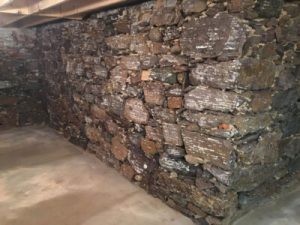
Once we pressure washed the walls, the true condition was clear. Holes and open joints ran throughout the foundation, giving water an easy path into the basement.
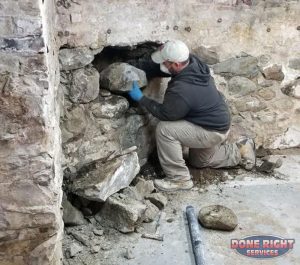
The most urgent issue was one corner of the foundation. So much mortar had failed that the corner was close to falling over. Left alone, it could have turned a repointing job into a major structural repair.
- Location: Somerville, MA
- Home built: 1890s
- Foundation type: Fieldstone
- Problems found: Crumbling, washed-out mortar; open joints throughout; a corner at risk of collapse; water seepage
- Work performed: Pressure washing, corner stabilization, full repointing, two-coat cement-based waterproof coating
- Warranty: 30-year warranty on the stone foundation system
Protecting the Basement Before We Start
Before any water touched the walls, we wrapped the washer, dryer, water heater and heating system in 6 mm plastic. We do the same for electrical panels and anything else that needs to stay dry.
Pressure washing then removed more than a century of grime, old patches and loose, deteriorated mortar. It also washed away mold and mildew. What’s left is an honest picture of every hole and joint that needs attention.
Our Restoration Process, Step by Step
The full restoration took several days, moving from cleaning to structural repair to sealing.
What We Did
- Stabilized the failing corner: We carefully cleaned out the old mortar, then packed the corner with a high-strength material that cures like hydraulic cement but is about three times stronger than traditional hydraulic cement and concrete. This stopped the corner from collapsing.
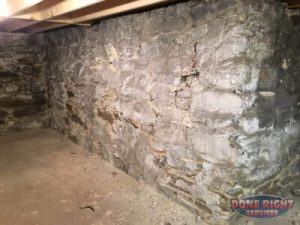
- Repointed every joint: We repointed the entire basement, including hard-to-reach areas under the stairs. Every joint was packed solid, leaving no holes or gaps. Walls in good shape, like this home’s back wall, needed far less work.
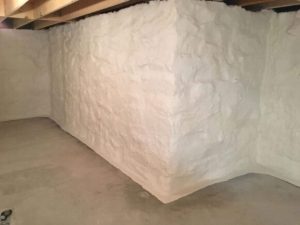
- Applied the first waterproof coat: With repointing complete, we applied a cement-based white waterproof coating from the top of the wall to the floor, then let it dry overnight.
- Applied the second coat: We returned the next day to apply a second full coat throughout the entire foundation.
Why We Repair Fieldstone from the Inside
For fieldstone foundations, the right place to stop water is inside the basement, not by digging outside.
Many homeowners assume the fix for a wet fieldstone basement is to excavate around the house. But these foundations were typically built with no mortar on the exterior below grade. The mortar holding the stones together is on the interior face, inside the basement. As that interior mortar deteriorates, small holes open up and water seeps in.
- Repairing from the inside addresses the actual cause
- Homeowners who start digging often find far more holes than expected
- Excavation can cause additional damage to the foundation
- Soil packed tightly against an old foundation helps support it, so it’s best left in place
The Results
The finished basement is drier, structurally stable and sealed from floor to top of wall, with no open holes or joints left anywhere.
- A drier basement: Every joint is repointed and the walls carry two coats of waterproof coating, cutting off the paths water used to follow.
- A stable foundation: The failing corner is now solid, and the full repointing restores strength across every wall.
- A fresher-smelling home: Pressure washing removed built-up mold and mildew, and sealing the walls reduces the moisture that lets it return. Because basement air circulates through the house, this can matter for family members with allergies or sinus sensitivities.
- Fewer entry points for soil gases: Sealing open joints closes gaps that radon and other soil gases can move through.
- A clean, bright finish: The white coating brightens the space and makes future issues easy to spot.
Why This Isn’t “Painting” the Foundation
You may have read that you should never paint a fieldstone foundation, and that advice is right. Masonry paint and products sprayed on by painters or unskilled masons often blister, flake and show efflorescence within a year or two. This coating is different: it’s a cement-based waterproof coating applied only after the foundation is fully repointed.
This system is covered by our 30-year warranty. If blistering, flaking or water seepage ever occurs, the repair is covered at no additional cost to the homeowner. Properly restored, a fieldstone foundation like this one can last another 150 to 200 years, preserving the history of the home.
Buying a Home with a Fieldstone Foundation?
Get a second opinion from a foundation specialist before you buy. A general home inspector may estimate a few thousand dollars in repointing, only for buyers to discover after closing that the real cost is much higher. Knowing the true cost up front could change your offer or your decision.
Be cautious with flipped homes and condo conversions, too. Some sellers coat fieldstone walls with DRYLOK or masonry paint so the basement looks finished at showings. Within a year or two, those coatings often start to deteriorate and flake, and the new owner inherits the problem. A professional assessment helps you avoid that surprise.
Fieldstone Foundation FAQ
Should I dig outside to fix a leaking fieldstone foundation?
Can I just paint my fieldstone basement walls?
How long does fieldstone repointing and sealing take?
What if a section of my foundation is starting to lean or fall?
Is the work warrantied?
Is Your Fieldstone Foundation Showing Its Age?
If you’re seeing crumbling mortar, open joints, water seepage or musty odors, Done Right Services can help. We restore fieldstone foundations throughout Massachusetts and Southern New Hampshire.
Schedule an inspection today or call 978‑808‑7873.