

Waterproofing a Leaking Precast Concrete Bulkhead
in Salem, NH
This Salem home’s precast concrete bulkhead had already been through several repair attempts, including hydraulic cement, epoxy injection and spray foam. None of them had solved the water problem. Our team removed the failed materials, cleaned and prepared the joint, and completed a new crack repair and waterproofing system.
In the video below, Jeremy from Done Right Services walks through what was causing the leak, why the previous repairs failed, and how the bulkhead was properly prepared and sealed.
Schedule an Inspection Give Us a Call
The Problem: A Bulkhead That Kept Leaking
The home had a standard precast concrete bulkhead, but water was getting through the joint where the precast stairs meet the foundation. Several attempts had already been made to stop the leak, yet the problem remained.
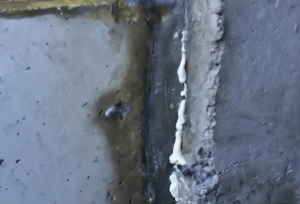
Previous repairs included hydraulic cement, two epoxy injection attempts and spray foam. Injection ports were still visible along the joint, and multiple layers of patch material had built up over time.
The home’s exterior grade was also relatively high around the bulkhead, so the homeowner was seeing water enter farther up the joint rather than only at the lower corners.
- Location: Salem, NH
- Home age: Approximately 10 years old at the time of the project
- Bulkhead type: Precast concrete
- Problem: Water entering through the bulkhead-to-foundation joint
- Previous repair attempts: Hydraulic cement, epoxy injection and spray foam
- Work performed: Removal of failed repairs, joint cleanup and grinding, sealing old injection-port holes, crack repair and waterproof coating
- Warranty: Lifetime warranty and 15-year money-back guarantee as described by Done Right Services
Why the Previous Repairs Failed
As Jeremy removed the old injection ports and repair material, one problem became immediately obvious: some of the injected material inside the joint had never properly cured.
Instead of forming a solid barrier inside the crack, the material remained soft enough to ooze out as the ports were removed. That meant it was not creating the firm, continuous seal needed to keep water from moving through the joint.
The spray foam and hydraulic cement were also removed so the team could get back to the actual concrete joint instead of trying to waterproof over layers of failed repairs.
Our Bulkhead Repair Process
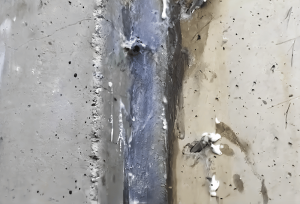
The repair started by stripping the joint back to a clean, workable surface. The goal was to remove the old patches completely so the new materials could bond directly to the concrete.
What We Did
- Removed the old injection ports: The remaining ports from previous epoxy repair attempts were taken out of the joint.
- Removed failed patch materials: Hydraulic cement, spray foam and other old repair materials were cleared away.
- Ground the joint clean: Excess material was removed and the concrete surface was cleaned and prepared for the new repair.
- Sealed the old port holes: Openings left behind by previous injection attempts were included in the new sealing process.
- Completed the crack repair: The joint was filled and sealed with the repair system used by Done Right Services.
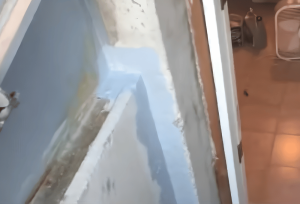
- Applied waterproofing: Waterproof coating was applied to help protect the repaired joint from future water intrusion.
Why Precast Bulkhead Joints Can Leak
Precast concrete bulkhead stairs are separate from the home’s foundation, which means the joint between the two materials can be vulnerable to movement.
During New Hampshire winters, freeze-and-thaw cycles can cause the precast section to move slightly as surrounding soil expands and contracts. Over time, that movement can break the original seal between the bulkhead and the foundation.
Once the seal opens, water can begin traveling through the joint. The lower corners are common entry points, although exterior grading can cause water to appear farther up the joint as it did on this Salem project.
- Freeze-and-thaw cycles can create movement around precast bulkheads
- The original bulkhead-to-foundation seal can eventually separate
- Water commonly enters at the corners and along the vertical joint
- Higher exterior grades can expose more of the joint to groundwater and runoff
The Finished Repair
Once the previous repairs were removed and the concrete was properly prepared, the entire problem area could be treated as one continuous repair instead of another patch placed over older material.
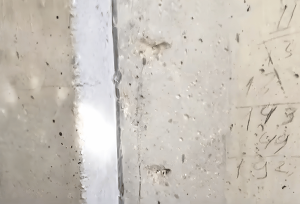
The completed joint is clean, fully repaired and sealed, with the old injection ports, loose hydraulic cement and spray foam removed from the equation.
- Old repairs removed: Failed epoxy ports, foam and hydraulic cement were cleared away.
- Clean repair surface: The joint was ground and prepared before new material was applied.
- Port holes sealed: Openings left from the previous injection system were incorporated into the new repair.
- Continuous joint repair: The bulkhead-to-foundation joint was sealed instead of repeatedly spot patched.
- Waterproof protection: The finished repair includes a waterproof coating over the treated area.
Why the Repair Method Matters
This project had already been repaired multiple times before Done Right Services arrived. The issue was not a lack of patch material. The problem was that the previous systems were not creating a lasting seal inside the bulkhead joint.
Before hiring a contractor for bulkhead waterproofing or crack repair, ask how the joint will be prepared, what products will be used and what warranty backs the work. Covering an old repair with another layer may hide the problem temporarily without addressing why water is still getting through.
Seeing Water Around Your Bulkhead?
Water around a precast bulkhead can be a sign that the original joint between the bulkhead and foundation has opened. Previous caulk, foam, cement or injection repairs may also need to be removed before the joint can be properly resealed.
Done Right Services provides bulkhead waterproofing for homeowners dealing with leaking precast bulkheads and foundation joints.
Bulkhead Waterproofing FAQ
Why does water leak around a precast concrete bulkhead?
Why didn’t the old epoxy injection stop the leak?
Can spray foam waterproof a leaking bulkhead joint?
Do old bulkhead repairs need to be removed first?
What warranty does Done Right Services offer?
Stop Repatching the Same Leaking Bulkhead
If hydraulic cement, foam or previous injection repairs have failed, Done Right Services can inspect the joint and determine what needs to be removed before the bulkhead is properly resealed.
Schedule an inspection today or call 978-808-7873.