

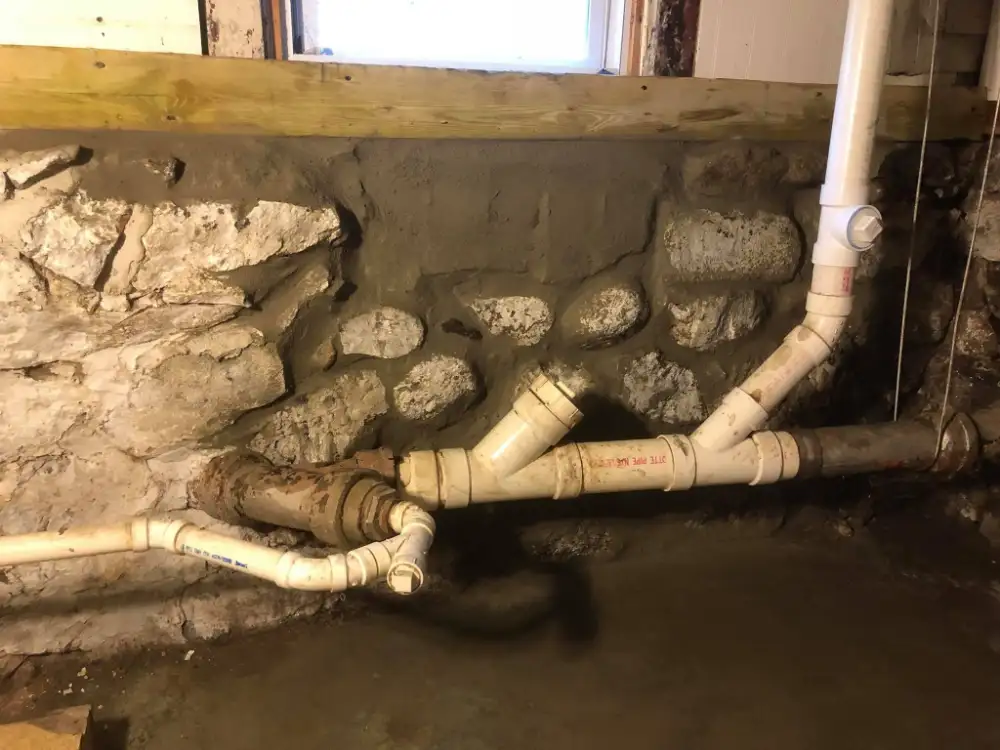
Buying an older home in Concord often means buying craftsmanship, character, and building methods that predate modern concrete foundations. In many antique and historic houses around town, that includes a fieldstone foundation that has supported the structure for generations.
A fieldstone foundation is not automatically a reason to walk away from an older home. The key is understanding its present condition, how water moves around it, and whether previous repairs were compatible with the original masonry.
Quick answer: When evaluating a fieldstone foundation in Concord, look for loose or displaced stones, deteriorated mortar, recurring basement moisture, significant wall movement, damaged sills, poor exterior drainage, and repairs that appear unusually hard or incompatible with the original masonry. A foundation that looks old can still be serviceable, while a recently patched foundation may deserve closer investigation.
What local homebuyers should know
-
Fieldstone foundations are a normal feature of many older New England homes and should be evaluated based on condition rather than age alone.
-
Concord’s historic building stock makes preservation-sensitive repairs particularly relevant, especially in or near the town’s six local historic districts.
-
Water management matters because rain, snowmelt, groundwater, and seasonal freeze-thaw conditions can all affect old masonry over time.
-
Crumbling mortar does not necessarily mean the stones themselves have failed, but the cause and extent of deterioration should be identified.
-
Before buying, understand whether visible repairs are cosmetic maintenance or evidence of movement, moisture problems, or structural work.
Why Do Fieldstone Foundations Matter When Buying an Older Home in Concord?
Fieldstone foundations matter when buying an older home in Concord because they can reveal how well the house has handled moisture, settlement, maintenance, and centuries of seasonal weather. Their condition can also influence future repair planning, basement use, and decisions about renovations.
Historic construction is an important part of the local housing landscape. Concord maintains six local historic districts: American Mile, Barrett Farm, Main Street, North Bridge/Monument Square, Church Street, and Hubbardville. The town specifically recognizes existing historic fieldstone foundations as features worth preserving in portions of its historic landscape.
Done Right Services works with local properties where understanding existing conditions is an important first step. When we look at an older foundation, our focus is not simply whether it looks different from modern concrete. We look at how the masonry is behaving now and what may be contributing to deterioration.
What Should You Look for During a Fieldstone Foundation Inspection?
When inspecting a fieldstone foundation, look closely at mortar condition, stone movement, moisture patterns, wall alignment, exterior drainage, and the connection between the foundation and the wood framing above it. These clues provide a much clearer picture than the foundation’s age alone.
A fieldstone wall can look uneven because it was built that way. That is different from fresh displacement, bulging, or areas where stones have lost support.
Pay particular attention to corners, areas around basement windows, penetrations for utilities, and sections near downspouts or low exterior grades. Also look upward. Problems at the sill or framing directly above the masonry can be just as relevant as deterioration within the stone wall itself.
What Are the Warning Signs of a Problem Fieldstone Foundation?
Warning signs of a problem fieldstone foundation include loose stones, missing mortar, active water entry, substantial bulging, recurring dampness, damaged framing above the wall, and repairs that continue to crack or fail. One symptom does not automatically mean the foundation needs major reconstruction, but several together justify closer evaluation.
Watch for:
-
Mortar that falls away easily or has disappeared from deep joints.
-
Individual stones that appear loose, shifted, or unsupported.
-
Sections of wall that visibly bow or bulge compared with adjacent masonry.
-
Water entering through joints during or after storms.
-
Persistent dampness, mineral deposits, staining, or musty basement conditions.
-
Wood sills, joists, or framing above the foundation showing moisture deterioration.
-
Fresh cracks forming through previous patches.
-
Exterior grading or drainage that consistently directs water toward the house.
In Concord’s older housing stock, separating normal age from active deterioration is especially important. An irregular-looking stone wall may be stable, while a neat-looking surface coating can sometimes conceal conditions that deserve investigation.
How Does Water Affect Fieldstone Foundations in Concord?
Water affects fieldstone foundations by moving through mortar joints, surrounding soil, and drainage paths, where repeated wetting and seasonal freezing can contribute to masonry deterioration. Keeping roof runoff and surface water away from an older foundation is therefore one of the most important parts of protecting it.
Concord’s historic settlement patterns are closely connected to local waterways, including Mill Brook, and portions of town include rivers, streams, wetlands, meadows, and low-lying landscapes. That does not mean every older house has a water problem, but drainage conditions should be evaluated property by property.
For a buyer, basement moisture should be considered together with what is happening outside. Gutters, downspout discharge, soil grading, paved areas, landscaping, and low spots near the foundation can all affect where water goes during storms and snowmelt.
What Causes Deterioration in Older Fieldstone Foundations?
The most common causes of fieldstone foundation deterioration are prolonged moisture exposure, loss of mortar, poor drainage, incompatible past repairs, localized movement, and neglected maintenance. In an old Massachusetts house, several of these conditions may occur together rather than one single problem explaining everything.
One important issue is repair material. Concord’s Historic District Commission design guidelines state that existing foundations should be restored and repaired with like materials, with attention to matching the strength and color of new mortar or binding material to existing elements.
That matters because historic masonry was not necessarily designed to behave like modern concrete construction. Before assuming that a harder or newer-looking repair is better, it is worth understanding what materials are already present.
Can You Maintain a Fieldstone Foundation Yourself?
Homeowners can safely monitor drainage, visible moisture, mortar loss, and changes in the wall, but significant masonry deterioration or movement should be professionally evaluated before repair work begins. Basic observation is useful, while rebuilding unstable areas or choosing repair mortar requires more specialized judgment.
Around an older Concord home, practical maintenance includes keeping gutters functional, directing downspouts away from the foundation where appropriate, avoiding soil buildup against vulnerable wood framing, and periodically checking the basement after heavy rain.
Take photos of questionable areas so changes can be compared over time. DIY work should stop where stones are loose, walls are moving, structural framing is affected, or the cause of water entry is unclear.
What Results Can You Expect From Fieldstone Foundation Repair?
A properly planned fieldstone foundation repair should stabilize deteriorated areas, restore failed joints where appropriate, and address contributing conditions such as water management rather than simply improve appearance. The exact scope depends on the foundation’s construction, condition, access, and the cause of the problem.
Some houses need localized repointing or individual masonry repairs. Others may require drainage improvements, sill work, or more extensive stabilization.
For homebuyers, this distinction matters. A repair recommendation should explain what is wrong, why it is happening, and whether the proposed work addresses the underlying condition.
What Mistakes Should Buyers Avoid With an Older Foundation?
The biggest mistake buyers can make is judging a fieldstone foundation solely by appearance instead of investigating movement, moisture, drainage, and previous repairs. Old masonry can look rough while functioning well, and cosmetic improvements can make a troubled wall look deceptively tidy.
Mistake: Assuming every crack means structural failure.
Consequence: You may overestimate the severity of normal masonry deterioration.
Better approach: Evaluate the crack together with movement, water conditions, and surrounding masonry.
Mistake: Ignoring basement moisture because the home is old.
Consequence: An active drainage problem may continue after closing.
Better approach: Determine where the moisture comes from and how water is handled outside.
Mistake: Assuming newer mortar is automatically better.
Consequence: A repair may not be compatible with historic masonry.
Better approach: Identify the existing materials and use an appropriate repair method.
Mistake: Planning major renovations before understanding the foundation.
Consequence: Structural or moisture work may interfere with future basement or first-floor plans.
Better approach: Understand the building from the foundation upward before finalizing renovations.
What Is a Common Fieldstone Foundation Scenario in Concord?
A common Concord scenario is an older house with a generally intact stone foundation, several areas of deteriorated mortar, evidence of past patching, and basement dampness that becomes more noticeable during wet periods. That combination calls for investigation, not an automatic conclusion that the entire foundation must be replaced.
A buyer might find the house appealing because of its historic character near Concord Center, Lexington Road, Barrett’s Mill Road, or West Concord. During the inspection period, however, the basement deserves the same attention as the visible living spaces.
The goal is to distinguish routine maintenance from a condition that should affect the repair budget or purchase decision.
When Should You Call a Foundation Professional?
Call a foundation professional when you see substantial wall movement, loose or falling stones, recurring water intrusion, extensive mortar loss, damaged structural wood, or repairs that have repeatedly failed. A professional evaluation is also worthwhile when you need to understand likely repair priorities before purchasing an older property.
We can help property owners evaluate foundation conditions and discuss appropriate next steps based on what is actually happening at the home.
How Do Your Options Compare?
The right option depends on whether the foundation needs monitoring, maintenance, targeted repair, or more substantial corrective work. Starting with the least invasive appropriate solution is especially valuable when dealing with historic masonry.
Simple homeowner monitoring can make sense when the wall is stable and only minor changes need to be tracked. Targeted masonry repair may be appropriate where joints have deteriorated but the wall remains fundamentally stable.
Drainage improvements may be part of the solution when water is contributing to deterioration. More extensive professional work becomes appropriate when masonry displacement, structural concerns, or significant ongoing moisture cannot be addressed through maintenance alone.
Are There Special Considerations for Concord Historic Properties?
Historic properties in Concord may require additional consideration because work within the town’s local historic districts can fall under Historic District Commission review, particularly when proposed changes affect exterior architectural features. Buyers planning substantial alterations should investigate applicable local requirements before assuming a particular renovation can proceed.
The Town of Concord states that its Historic Districts Commission has jurisdiction over projects within the six local historic districts. Its guidelines also recommend repairing existing foundations with in-kind materials.
For houses outside those districts, other local requirements may still apply depending on the scope of work. The town also has a demolition review process for proposals involving total demolition of structures 50 or more years old.
What Areas Do We Serve Around Concord?
We serve Concord-area property owners dealing with older foundations and related masonry concerns, with solutions based on the individual building and site conditions. Older homes can also be found throughout nearby Middlesex County communities, including Lincoln, Sudbury, Acton, Bedford, and Carlisle.
Service availability for a specific address should be confirmed directly with us.
What Can Happen if You Ignore Fieldstone Foundation Problems?
Ignoring active fieldstone foundation deterioration can allow water intrusion, mortar loss, masonry movement, or damage to adjacent building materials to become more difficult to address. The concern is not simply that the foundation is old. It is whether an active problem is continuing without correction.
For someone buying an older home, identifying those issues before closing can make repair planning much more realistic. It can also help distinguish ordinary maintenance from work that deserves immediate attention.
FAQ
Are fieldstone foundations common in older Concord homes?
Fieldstone foundations can be found in Concord’s historic building stock and are specifically recognized in the town’s preservation guidance. Their presence alone does not indicate a defective foundation. Condition, drainage, mortar integrity, stone stability, and previous alterations are more useful factors when deciding whether repair or further evaluation is needed.
Should I avoid buying a Concord home with a fieldstone foundation?
No, a fieldstone foundation by itself is not necessarily a reason to avoid an older Concord home. Buyers should focus on its current condition and maintenance needs. A stable foundation with appropriate upkeep presents a very different situation from one showing active movement, extensive deterioration, or persistent water intrusion.
Is a damp basement normal in an old Massachusetts house?
Some older basements experience moisture, but recurring dampness should still be investigated rather than dismissed as normal. Look at the timing of moisture, exterior grading, gutters, downspouts, masonry joints, and other potential entry points. Understanding the source is more useful than simply accepting moisture because the house is old.
Can crumbling mortar in a Concord fieldstone foundation be repaired?
Deteriorated mortar can often be repaired, but the appropriate material and scope depend on the existing masonry and its condition. Concord’s historic-district guidance specifically recommends repairing existing foundations with like materials and matching new mortar or binding materials appropriately to the existing construction.
Does buying in a Concord historic district change foundation repair options?
It can, particularly if proposed work affects exterior features under the jurisdiction of the Historic Districts Commission. Concord has six local historic districts, and property owners contemplating work within them should review applicable town requirements. Interior or non-visible work may involve different considerations depending on the project.
What should I ask about a fieldstone foundation before closing?
Ask about water history, previous masonry repairs, drainage work, structural repairs, basement flooding, and any available permits or documentation. Then compare those answers with what is physically visible. If significant deterioration or unexplained repairs are present, obtaining a focused professional evaluation can clarify likely priorities and future costs.
What time of year is best for checking foundation moisture in Concord?
Wet periods can make water-entry patterns easier to identify because you can see how the property manages rainfall and saturated soil. Regardless of season, examine drainage and look for staining or previous moisture evidence. Snowmelt and freeze-thaw conditions also make year-round exterior water management important for older Massachusetts masonry.
Should a fieldstone foundation be covered with concrete?
Not automatically, because covering an old stone wall does not by itself correct the cause of deterioration or moisture. Before applying coatings, parging, or other materials, determine the wall’s condition and whether the proposed material is compatible. This is particularly relevant when preserving historic masonry.
Protect the Character of Your Concord Home From the Ground Up
An older house can offer character that modern construction cannot reproduce, but its foundation deserves careful attention before you buy or begin renovations. Understanding the masonry, moisture conditions, drainage, and previous repairs gives you a much stronger basis for deciding what the property actually needs.
Get Clear Answers About an Older Concord Foundation
We can help you understand visible fieldstone foundation concerns and the repair options that may fit the property.