

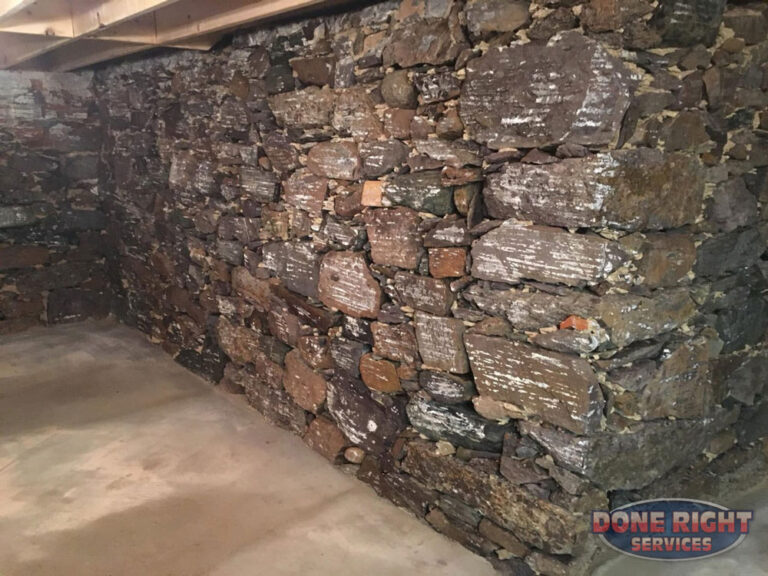
Older homes are part of the character of Lexington and Bedford, but traditional stone foundations can react differently to basement moisture than newer poured-concrete foundations. Seasonal rain, melting snow, humid summers, and freeze-thaw conditions can all contribute to moisture around foundation walls.
Quick answer: Basement moisture can gradually weaken the mortar joints between foundation stones, contribute to efflorescence and musty conditions, and increase the risk of movement or deterioration. In older Lexington and Bedford homes, controlling water around the foundation is especially important because stone walls depend on sound mortar, proper drainage, and appropriate repair methods to remain stable.
What local homeowners should know
-
Damp stone does not automatically mean a foundation is failing, but recurring moisture deserves attention.
-
Older homes around Lexington and Bedford may have stone foundation systems that were built differently from modern concrete foundations.
-
Middlesex County’s wet weather, winter snow, and repeated freeze-thaw conditions can expose foundation walls to changing moisture levels.
-
Gutters, downspouts, grading, and surface drainage can have a major influence on how much water reaches a basement.
-
Repointing damaged mortar without addressing the source of moisture may leave the underlying problem unresolved.
Why Does Basement Moisture Matter for Stone Foundations?
Basement moisture matters because a stone foundation relies on the condition of its masonry and mortar joints, and repeated exposure to water can accelerate deterioration. For homeowners in Lexington and Bedford, the concern is often not a single damp day but a pattern of water entering, evaporating, freezing, or remaining trapped around older masonry.
The area includes many established neighborhoods and historic properties, particularly around Lexington Center, the Battle Green, Bedford Center, and the communities surrounding Minute Man National Historical Park. Older construction can include fieldstone or other traditional masonry foundation systems that require an approach suited to the existing materials.
Done Right Services works with local property owners dealing with basement and foundation concerns. When we evaluate a moisture-related issue, the goal is to understand both what is happening to the masonry and where the water is coming from.
What Do We Commonly See in Local Stone Basements?
Local stone basements commonly show damp mortar joints, mineral deposits, musty conditions, localized seepage, and areas where older mortar has begun to loosen or disappear. These are professional field observations rather than claims that every older foundation in the area will develop the same problems.
Moisture patterns can also change throughout the year. A basement may look relatively dry during one season and become noticeably damp after prolonged rain or snowmelt.
That makes timing useful when evaluating a problem. Homeowners can note whether dampness appears after storms, during spring thaw, during humid summer weather, or continuously. Those observations can help distinguish an occasional humidity issue from water repeatedly reaching the foundation.
How Can Moisture Affect a Lexington or Bedford Home?
Moisture can affect a Lexington or Bedford home by damaging masonry materials, raising basement humidity, creating musty odors, and allowing relatively small foundation problems to become more involved over time. The exact impact depends on the foundation’s condition, drainage around the house, and how water is entering.
Stone foundations contain many joints. When mortar becomes soft, cracked, or missing, those joints can provide pathways for additional moisture. Persistent dampness can also make basement storage less practical and contribute to an uncomfortable environment.
Outside the basement, poor drainage can compound the problem. Water discharged close to a foundation or ground that directs runoff toward the house can keep masonry wetter than necessary.
What Are the Warning Signs of Moisture Problems?
Warning signs include recurring damp spots, loose mortar, visible seepage, mineral deposits, and changes in the position or condition of foundation stones. Lexington and Bedford homeowners should pay particular attention when these symptoms become more noticeable after rain or snowmelt.
Look for:
-
White or chalky mineral deposits on stone or mortar.
-
Mortar that feels loose, sandy, cracked, or visibly recessed.
-
Damp areas that repeatedly appear in the same location.
-
Water trickling or seeping through joints during storms.
-
Musty basement odors that persist even when there is no standing water.
-
Stones that appear loose, displaced, or different from surrounding masonry.
-
Peeling coatings or finishes on the interior foundation wall.
-
Standing water near the foundation or basement floor after wet weather.
A single symptom does not diagnose the cause. Several occurring together, particularly repeatedly, are a stronger reason to have the area evaluated.
When Should You Call a Professional?
A professional should evaluate a stone foundation when moisture is recurring, mortar is deteriorating, stones appear to be moving, or water is actively entering the basement. Homeowners can safely monitor minor dampness and check visible drainage conditions, but structural movement and significant masonry deterioration should not become DIY experiments.
You can inspect gutters, downspouts, visible grading, and accessible basement walls yourself. Take photos after storms and compare the same areas over time.
Professional evaluation becomes more important when cracks change, stones shift, mortar falls out of joints, or seepage continues despite basic drainage improvements. Older masonry also deserves care when choosing repair materials because an inappropriate repair can perform differently from the original wall.
What Commonly Causes Wet Stone Foundations Locally?
The most common contributors are roof runoff, poor grading, saturated soil, deteriorated masonry joints, and seasonal moisture changes. Around Lexington, Bedford, and neighboring Middlesex County communities such as Concord and Burlington, several of these conditions can occur at the same property.
1. Roof runoff and downspouts: Water released beside the house can saturate soil next to the foundation.
2. Poor surface grading: Low spots or ground sloping toward the building can direct rain and snowmelt toward stone walls.
3. Aging mortar: Older joints can deteriorate over time, leaving easier pathways for moisture.
4. Seasonal saturation: Extended wet periods and melting snow can increase the amount of water in the soil around a foundation.
5. Freeze-thaw exposure: Moisture near exterior masonry can be subjected to repeated freezing and thawing during a Massachusetts winter.
The correct repair depends on which combination is actually present.
How Can Homeowners Reduce Basement Moisture?
Homeowners can reduce basement moisture by keeping roof and surface water away from the foundation, monitoring masonry condition, and addressing small drainage problems before they become persistent. In Lexington and Bedford, fall and spring are especially useful times for exterior drainage checks.
Keep gutters clear and confirm that downspouts discharge water away from the foundation. Look for settled soil or depressions that collect water beside the house. After a substantial rain, walk around the property and observe where runoff travels.
Inside, monitor recurring damp areas rather than simply covering them. Paint or another surface coating may hide visible symptoms without correcting water movement through the wall.
DIY work should stop when the repair involves loose stones, extensive mortar deterioration, suspected structural movement, or a drainage problem whose source is unclear.
What Results Can You Expect From Proper Repairs?
Proper repairs should address the identified source of moisture while improving the condition of affected foundation areas, but the appropriate result depends on the existing wall and cause of water entry. An older stone basement should be evaluated according to its construction rather than treated automatically like a modern poured-concrete basement.
Some properties primarily need better exterior water management. Others may require masonry repairs, repointing, or additional moisture-control measures.
The objective is not to promise that an old basement will behave exactly like new construction. It is to reduce damaging moisture conditions and maintain the foundation using solutions appropriate to the property.
What Mistakes Should Local Homeowners Avoid?
The biggest mistakes are treating only the visible symptom, ignoring exterior drainage, and using a repair approach without understanding the existing masonry. These shortcuts can leave Lexington and Bedford homeowners dealing with the same moisture pattern again.
Mistake: Covering a damp wall.
Consequence: The visible stain may disappear while moisture continues behind the finish.
Better approach: Determine where the water originates first.
Mistake: Repointing without checking drainage.
Consequence: Newly repaired joints may remain exposed to excessive moisture.
Better approach: Evaluate masonry and water management together.
Mistake: Assuming every crack means foundation failure.
Consequence: Homeowners may pursue an unnecessary solution.
Better approach: Have concerning movement evaluated in context.
Mistake: Waiting for standing water.
Consequence: Early signs such as soft mortar and recurring dampness may worsen unnoticed.
Better approach: Investigate patterns before severe leakage develops.
What Is a Common Local Scenario?
A common local scenario is an older home that stays mostly dry until prolonged rain or snowmelt reveals damp areas along one section of the stone foundation. The homeowner may initially suspect that the wall itself is the entire problem, even though exterior water management may also be contributing.
For example, an older property near Bedford Center or East Lexington might have settled soil near the house, aging mortar, and a downspout discharging too close to the foundation. This is an illustrative scenario, not a Done Right Services case study.
A useful assessment would consider all of those conditions rather than selecting a repair based only on the damp interior surface.
What Services Can Help With Stone Foundation Moisture?
Stone foundation moisture may require masonry repair, repointing, foundation evaluation, or water-management improvements depending on its cause. The best solution starts by identifying how water reaches the wall and determining whether the existing masonry has already deteriorated.
We can evaluate visible foundation conditions and discuss appropriate service options based on what is found at the property.
Should You Choose DIY Maintenance or Professional Repair?
DIY maintenance works best for routine observation and straightforward drainage upkeep, while professional service is appropriate for masonry deterioration, recurring seepage, or suspected foundation movement. The distinction is especially useful with older Lexington and Bedford homes, where stonework may have been repaired or altered several times over its lifespan.
Homeowners can clean gutters, watch runoff, document damp areas, and inspect accessible walls. A professional can assess deteriorated joints, loose masonry, persistent water entry, and conditions that may require specialized repairs.
The goal is to match the response to the severity and source of the problem rather than automatically choosing the most extensive option.
Where Do We Serve?
We serve property owners in Lexington and Bedford and can address local foundation and moisture concerns within our service area. Nearby Middlesex County communities include Concord, Burlington, and other established towns where older housing and seasonal New England weather can create similar basement concerns.
What Can Happen If Basement Moisture Is Ignored?
Ignoring recurring basement moisture can allow mortar deterioration, seepage, and related foundation concerns to progress, potentially making future repairs more involved. A damp patch after one storm may not represent an emergency, but a pattern that returns season after season deserves investigation.
Addressing drainage or masonry deterioration earlier can help property owners make repair decisions before conditions become more disruptive.
Frequently Asked Questions
Is moisture normal in an old Lexington stone basement?
Some older Lexington basements can experience periodic dampness, but recurring moisture should not automatically be dismissed as normal. Consistent wet spots, deteriorating mortar, seepage, or changing masonry conditions are worth investigating. Identifying whether the moisture comes from drainage, humidity, or water entering through the foundation helps determine the appropriate response.
Why does my Bedford basement get wet after heavy rain?
A Bedford basement that becomes wet after heavy rain may be receiving water from saturated soil, roof runoff, poor grading, or openings in foundation joints. The timing is an important clue. Checking gutters, downspouts, surface drainage, and the location of interior seepage can help narrow down the source.
Can damaged mortar cause water to enter a stone foundation?
Yes, deteriorated or missing mortar can provide pathways for water through a stone foundation, although it may not be the only cause. If exterior drainage continually directs water toward the wall, simply repairing mortar may not resolve the overall moisture problem. Both masonry condition and water management should be considered.
Does Massachusetts winter weather affect stone foundations?
Massachusetts winter conditions can expose masonry to moisture and freeze-thaw cycles, particularly where stone and mortar remain wet. Snowmelt can also add water to soil around a foundation. Checking drainage before winter and again during spring can help Lexington and Bedford homeowners spot developing problems.
Should I waterproof the inside of my Lexington stone foundation?
Interior treatment should be selected only after the moisture source and existing masonry are understood. A coating may change the appearance of a Lexington basement without correcting exterior drainage or deteriorated mortar. Older stone walls can require different repair considerations than modern concrete, so persistent moisture is best evaluated before applying a covering.
How can Bedford homeowners check foundation drainage?
Bedford homeowners can start by observing the property during or shortly after rain. Check whether gutters overflow, where downspouts discharge, whether water collects beside the house, and whether the ground directs runoff toward the foundation. Compare those exterior observations with damp areas visible inside the basement.
Does white residue on basement stone mean there is a leak?
White mineral residue often indicates that moisture has moved through masonry and left deposits behind as the water evaporated, but it does not identify the exact source. If deposits repeatedly return, examine nearby drainage and watch the area during wet weather. Persistent moisture may warrant a professional assessment.
When is loose foundation stone an urgent concern?
Loose or visibly displaced stone deserves prompt professional evaluation, particularly when the condition appears to be changing or is accompanied by cracking, water entry, or significant mortar loss. Avoid removing stones or attempting substantial structural repairs yourself. An evaluation can determine whether the issue is localized masonry deterioration or part of a broader foundation concern.
Protect Your Stone Foundation From Recurring Moisture
Older stone foundations are part of the local building character in Lexington and Bedford, and caring for them starts with understanding how water interacts with the masonry. Watching drainage, recognizing early warning signs, and choosing repairs appropriate to an older foundation can help protect the property for the long term.
Get Clear Answers About Your Basement Moisture
We can help you identify foundation and moisture concerns and understand the repair options appropriate for your property.