

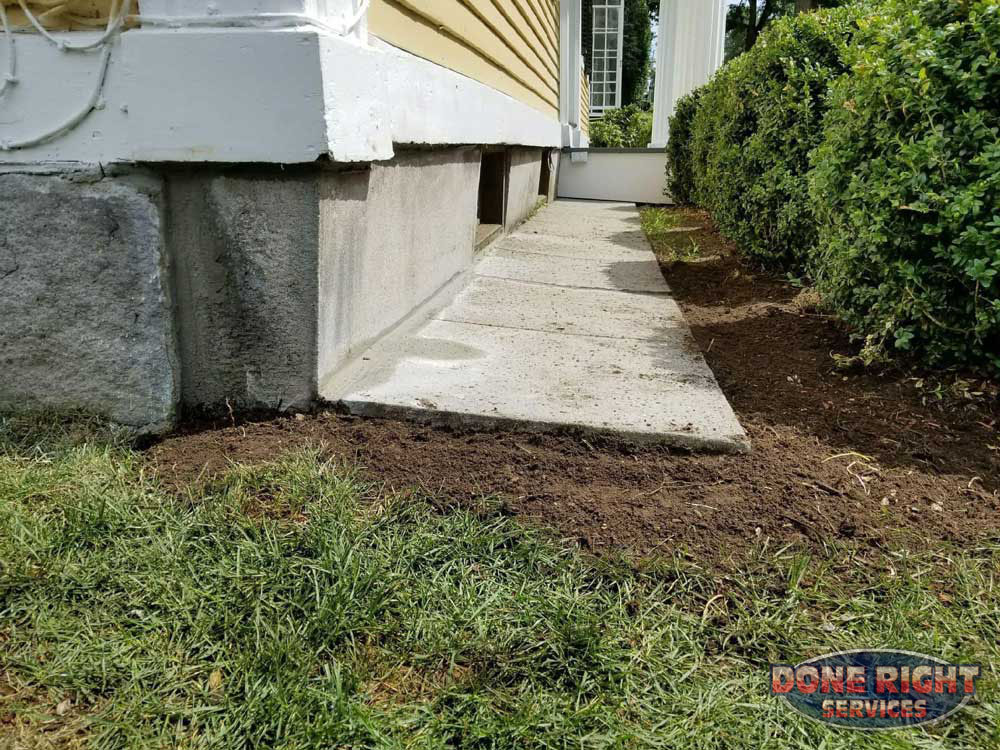
Stone foundations are a familiar sight in older homes across Massachusetts and New Hampshire, from historic properties around Greater Boston to farmhouses, Colonials, and village homes throughout southern New Hampshire. After decades of New England winters, however, the mortar between those stones can loosen, crack, or wash away.
Repointing is one of the primary ways to maintain these foundations before deteriorated joints lead to larger moisture or masonry problems.
Quick answer: Repointing a stone foundation means removing loose, cracked, or deteriorated mortar from the joints between foundation stones and replacing it with compatible new mortar. The goal is to restore the joints, help stabilize the masonry, and reduce pathways for water intrusion while allowing the foundation to perform as intended. Proper mortar selection matters, especially in older New England homes where the original masonry may require a softer, more breathable mortar than modern high-strength mixes.
What local homeowners should know
-
Repointing addresses deteriorated mortar joints rather than simply covering the surface with a new coating.
-
Massachusetts homes with historic stone foundations can experience repeated moisture and freeze-thaw exposure that accelerates mortar deterioration.
-
New Hampshire foundations also face long winters, spring snowmelt, and seasonal moisture that can expose weaknesses in aging joints.
-
Missing mortar, loose stones, damp basement walls, and sandy mortar on the basement floor can all justify a closer inspection.
-
Using mortar that is too hard for older stone masonry can create new problems instead of protecting the foundation.
What Does Repointing a Stone Foundation Actually Do?
Repointing a stone foundation restores deteriorated mortar joints by carefully removing failing material and replacing it with mortar that is appropriate for the existing stone and construction. For Massachusetts and New Hampshire homeowners, the work can help preserve an older foundation while addressing open joints that allow water, air, and debris to enter.
Mortar is more than filler between stones. In a traditional masonry foundation, it helps keep individual stones properly bedded and distributes forces through the wall.
Over time, the exposed face of the mortar can erode. A repointing project typically focuses on those deteriorated joints while leaving sound masonry in place.
This is different from smearing a thin layer of mortar over the entire wall. Surface coatings can hide deteriorated joints without correcting what is happening underneath.
Why Does Stone Foundation Repointing Matter in Massachusetts and New Hampshire?
Stone foundation repointing matters in Massachusetts and New Hampshire because moisture combined with repeated freezing and thawing can gradually damage mortar and other porous masonry materials. Older homes throughout New England may experience decades of rain, snow, melting ice, groundwater, and seasonal temperature changes around their foundations.
Massachusetts preservation guidance identifies water penetration combined with freeze-thaw movement as a major source of deterioration in exposed masonry. Similar conditions exist north of the state line.
In New Hampshire, spring runoff and winter conditions make exterior drainage especially important. State rules addressing foundations in certain residential construction contexts specifically emphasize directing water away from the home to prevent moisture accumulation.
That regional pattern matters for stone foundations. Water that reaches weakened joints may freeze, expand, thaw, and repeat the process throughout the winter.
Done Right Services works with homeowners dealing with masonry and foundation concerns in Massachusetts and New Hampshire. When we evaluate aging stonework, we look beyond the visible mortar surface to consider moisture patterns, loose material, drainage, and the overall condition of the wall.
What Do We Commonly See in Older New England Stone Foundations?
Older New England stone foundations commonly show weathered mortar, localized gaps, loose joint material, and evidence of moisture after many years of exposure. These conditions do not automatically mean the foundation has failed, but they can indicate that maintenance or professional masonry repair should be considered.
Stone foundations are common in the region’s older housing stock, including properties in communities such as Lowell, Lawrence, Haverhill, Nashua, Manchester, and Concord.
The condition of each foundation varies. One basement may have relatively sound stones with deteriorated surface joints, while another may have sections where mortar has fallen deeply out of the wall.
Homeowners may also see white mineral deposits, damp-looking areas, or small pieces of mortar collecting near the base of the wall. These observations can help identify where closer inspection is warranted.
What Are the Warning Signs That a Stone Foundation May Need Repointing?
The clearest signs that a stone foundation may need repointing are missing mortar, joints that crumble when lightly touched, visible gaps between stones, and recurring moisture around deteriorated sections. Massachusetts and New Hampshire homeowners should pay particular attention after winter and during wet spring weather.
Common warning signs include:
-
Mortar joints that appear recessed or washed out
-
Powdery or sandy mortar collecting on the basement floor
-
Small sections of mortar falling from the wall
-
Open gaps between individual stones
-
Stones that appear loose or have shifted
-
Dampness concentrated around deteriorated joints
-
Cracking through repaired areas
-
Previous patches that are separating from the original masonry
Some surface erosion may be maintenance-related, while bulging walls, significant movement, large cracks, or displaced stones can indicate a more serious issue requiring professional evaluation.
When Should You Call a Professional for a Stone Foundation?
You should call a masonry professional when mortar loss is widespread, stones are loose or moving, water is repeatedly entering the basement, or you cannot tell whether the problem is limited to the joints or involves the foundation itself. Structural movement should not be treated as a routine DIY repointing project.
Homeowners can safely perform basic visual checks. Look at the foundation after heavy rain, check the condition of gutters and downspouts, and watch for newly fallen mortar.
Avoid removing large sections of old mortar without understanding how the wall is constructed. Traditional stone foundations can contain irregular stones, rubble, and inner portions of the wall that are not visible from the basement.
If the wall is bowing, stones are moving, or cracks appear to be changing, the project may require more than ordinary repointing.
What Causes Mortar to Deteriorate in Local Stone Foundations?
The most common causes of mortar deterioration in Massachusetts and New Hampshire are prolonged moisture exposure, freeze-thaw cycling, poor drainage, normal aging, and incompatible previous repairs. Several of these causes often occur together, especially around foundations that have been exposed to New England weather for generations.
1. Water around the foundation
Overflowing gutters, short downspouts, poor grading, and concentrated roof runoff can keep masonry wetter than necessary.
2. Freeze-thaw cycles
Water inside porous mortar can freeze as temperatures fall. Repeated cycles can gradually weaken already weathered joints.
3. Age
Mortar is a maintenance material. On a century-old Massachusetts or New Hampshire home, deterioration may simply reflect decades of exposure.
4. Incompatible mortar repairs
A very hard modern mortar is not automatically better. Historic masonry often performs best when the replacement mortar is compatible with the original materials.
5. Unresolved drainage problems
Repointing a wet wall without addressing the water source may improve the joints while leaving the underlying moisture problem unchanged.
How Can Homeowners Help Protect a Stone Foundation?
Homeowners can protect a stone foundation by controlling water around the house, inspecting mortar regularly, and addressing small areas of deterioration before they become widespread. In Massachusetts and New Hampshire, spring and fall are useful times for visual checks because winter damage and drainage problems are easier to spot.
Keep gutters clear and make sure downspouts discharge water away from the foundation.
Check exterior grading for areas where rain or snowmelt flows toward the house instead of away from it.
Inside the basement, watch for changes in dampness, new mortar debris, or gaps that become more noticeable over time.
Avoid sealing an old stone wall with an impermeable coating simply because the basement feels damp. Moisture management in traditional masonry requires understanding how the wall releases as well as absorbs moisture.
DIY maintenance should generally stop when stones are loose, mortar loss is deep, the wall is moving, or the correct mortar type is uncertain.
What Results Should You Expect From Professional Repointing?
Professional repointing should leave deteriorated joints properly filled with compatible mortar while preserving sound stonework and avoiding unnecessarily hard or superficial repairs. The finished wall should look maintained rather than simply coated, and the work should address the condition of the joints that actually need repair.
Repointing can help close open joints, improve the integrity of the masonry, and reduce obvious pathways for water and air.
It does not correct every basement moisture issue. Groundwater, drainage defects, foundation movement, plumbing leaks, and exterior grading may require separate solutions.
The condition and construction of the existing wall determine how much work is appropriate.
What Are Common Stone Foundation Repointing Mistakes?
Common repointing mistakes include using incompatible mortar, applying new material over loose mortar, ignoring exterior drainage, and assuming every basement water problem originates in the mortar joints. These shortcuts can be especially problematic in older Massachusetts and New Hampshire properties.
Mistake: Covering weak mortar instead of removing it properly.
Consequence: The new surface may separate because it is bonded to deteriorated material.
Better approach: Remove unsound mortar to an appropriate depth before installing the replacement material.
Mistake: Choosing the hardest mortar available.
Consequence: A mortar that is substantially harder than the surrounding masonry may contribute to stone deterioration.
Better approach: Select a mortar compatible with the existing foundation.
Mistake: Repointing without checking drainage.
Consequence: The repaired wall may continue to experience excessive moisture.
Better approach: Inspect gutters, downspouts, grading, and runoff at the same time.
Mistake: Treating wall movement as a cosmetic mortar issue.
Consequence: A more significant foundation concern can be overlooked.
Better approach: Have loose, bulging, or displaced sections professionally evaluated.
What Is a Common Local Stone Foundation Scenario?
A common Massachusetts or New Hampshire scenario is an older home where the basement wall looks mostly solid but several mortar joints have become sandy, recessed, or open after years of seasonal moisture exposure. The homeowner may first notice loose mortar on the floor or dampness following heavy rain or spring snowmelt.
In this situation, the next step is not automatically to coat the entire wall.
A proper evaluation should determine which joints are deteriorated, whether stones remain stable, what type of repair material is appropriate, and whether exterior drainage is contributing to the problem.
If the foundation itself remains stable, targeted or broader repointing may be part of the maintenance plan.
What Services Can Address a Deteriorating Stone Foundation?
Services for a deteriorating stone foundation may include masonry inspection, mortar-joint repointing, localized stone repair, and evaluation of moisture or drainage conditions contributing to deterioration. The correct solution depends on whether the concern involves normal mortar wear, water intrusion, loose masonry, or structural movement.
We can help homeowners determine whether visible deterioration is consistent with a repointing need or whether another repair approach should be considered.
Is DIY or Professional Repointing the Better Option?
DIY repointing may be reasonable for limited maintenance when the wall is stable and the homeowner understands historic mortar compatibility, but professional work is usually the safer choice for widespread deterioration, loose stones, deep joints, or uncertain foundation conditions. Older New England masonry can be less straightforward than it first appears.
A small, accessible mortar joint is very different from a large basement wall with irregular stones and extensive mortar loss.
Professional assessment is particularly worthwhile when a home in Massachusetts or New Hampshire has recurring water issues, previous cement-heavy patches, visible wall movement, or several generations of repairs.
The goal is not simply to make every joint look new. The goal is to repair the masonry appropriately.
Where Is Stone Foundation Repointing Relevant in Massachusetts and New Hampshire?
Stone foundation repointing is relevant throughout Massachusetts and New Hampshire, particularly in communities with older homes and historic masonry construction. Properties around Greater Boston, the Merrimack Valley, Worcester County, southern New Hampshire, Manchester, Nashua, and surrounding towns may all contain foundations that have weathered many decades of New England seasons.
The age, stone type, mortar, drainage, and exposure of the individual property remain more important than the town name alone.
What Can Happen If Deteriorated Mortar Is Ignored?
Ignoring deteriorated mortar can allow joints to become progressively deeper and more open, increasing opportunities for moisture penetration and reducing the support mortar provides around individual stones. In Massachusetts and New Hampshire, repeated winter weather can make an existing moisture-related weakness more difficult to ignore over time.
Waiting does not mean every wall will develop a structural problem. However, minor maintenance can become more involved if mortar continues to disappear or individual stones begin to loosen.
Addressing the cause of deterioration early also gives homeowners an opportunity to correct drainage problems before additional masonry is affected.
Frequently Asked Questions About Stone Foundation Repointing
How do I know if my Massachusetts stone foundation needs repointing?
A Massachusetts stone foundation may need repointing when mortar is visibly missing, recessed, loose, sandy, or falling from the joints. Dampness near deteriorated joints can provide another clue. If stones are shifting, the wall is bulging, or cracks are changing, have the foundation evaluated rather than assuming repointing alone will solve the problem.
Why do stone foundation joints deteriorate in New Hampshire?
Stone foundation joints in New Hampshire commonly deteriorate because of age, moisture exposure, and repeated freezing and thawing. Snowmelt, spring runoff, roof drainage, and poor grading can also keep masonry wet. The more often weakened mortar absorbs water and experiences winter conditions, the more likely deterioration may continue.
Can repointing stop water from entering a Massachusetts basement?
Repointing can reduce water entry through open or deteriorated mortar joints, but it does not solve every source of basement moisture. Massachusetts homeowners should also investigate gutters, downspouts, surface grading, groundwater, plumbing, and other potential sources. Effective moisture control often requires addressing both the masonry and the conditions bringing water to the foundation.
What type of mortar should be used on an old New England stone foundation?
The appropriate mortar should be compatible with the existing stone, original mortar, and construction rather than simply being the strongest available mix. Older Massachusetts and New Hampshire masonry may require a more forgiving mortar than modern high-strength cement products. The existing wall should be evaluated before selecting a replacement material.
Is spring a good time to inspect a stone foundation in New Hampshire?
Spring is a useful time to inspect a New Hampshire stone foundation because winter conditions and snowmelt can make moisture patterns and weakened mortar easier to identify. Look for fresh debris, damp areas, open joints, and changes since fall. An additional inspection before winter can help catch drainage or masonry maintenance needs.
Does every crack in a stone foundation require repointing?
No, not every crack means the foundation simply needs repointing. Cracks can occur in mortar, previous patches, individual stones, or areas affected by movement. The location, width, pattern, and whether the crack is changing all matter. Significant or progressive cracking should be professionally evaluated before a repair method is chosen.
Can I use concrete or cement to patch an old Massachusetts stone foundation?
A generic concrete or high-strength cement patch is not automatically appropriate for an old Massachusetts stone foundation. A repair material that is significantly harder or less compatible than the original masonry can cause problems. Proper repointing starts with understanding the wall and selecting mortar suited to the stone and existing construction.
How often should I inspect my stone foundation?
Homeowners should visually check an older stone foundation at least periodically and after conditions that could expose new problems, such as a harsh winter or unusually heavy rain. In Massachusetts and New Hampshire, checking in spring and again before winter provides a practical opportunity to identify mortar loss, drainage problems, or new moisture patterns.
Protect Your New England Stone Foundation Before Small Problems Grow
A well-maintained stone foundation can remain an important part of an older Massachusetts or New Hampshire home for generations. Repointing focuses on preserving that masonry by replacing deteriorated mortar appropriately while identifying moisture, drainage, or movement that may require additional attention.
Keep Your Stone Foundation Sound Through New England’s Changing Seasons
We can evaluate deteriorated mortar and help you understand the appropriate next step without assuming every older foundation needs the same repair.